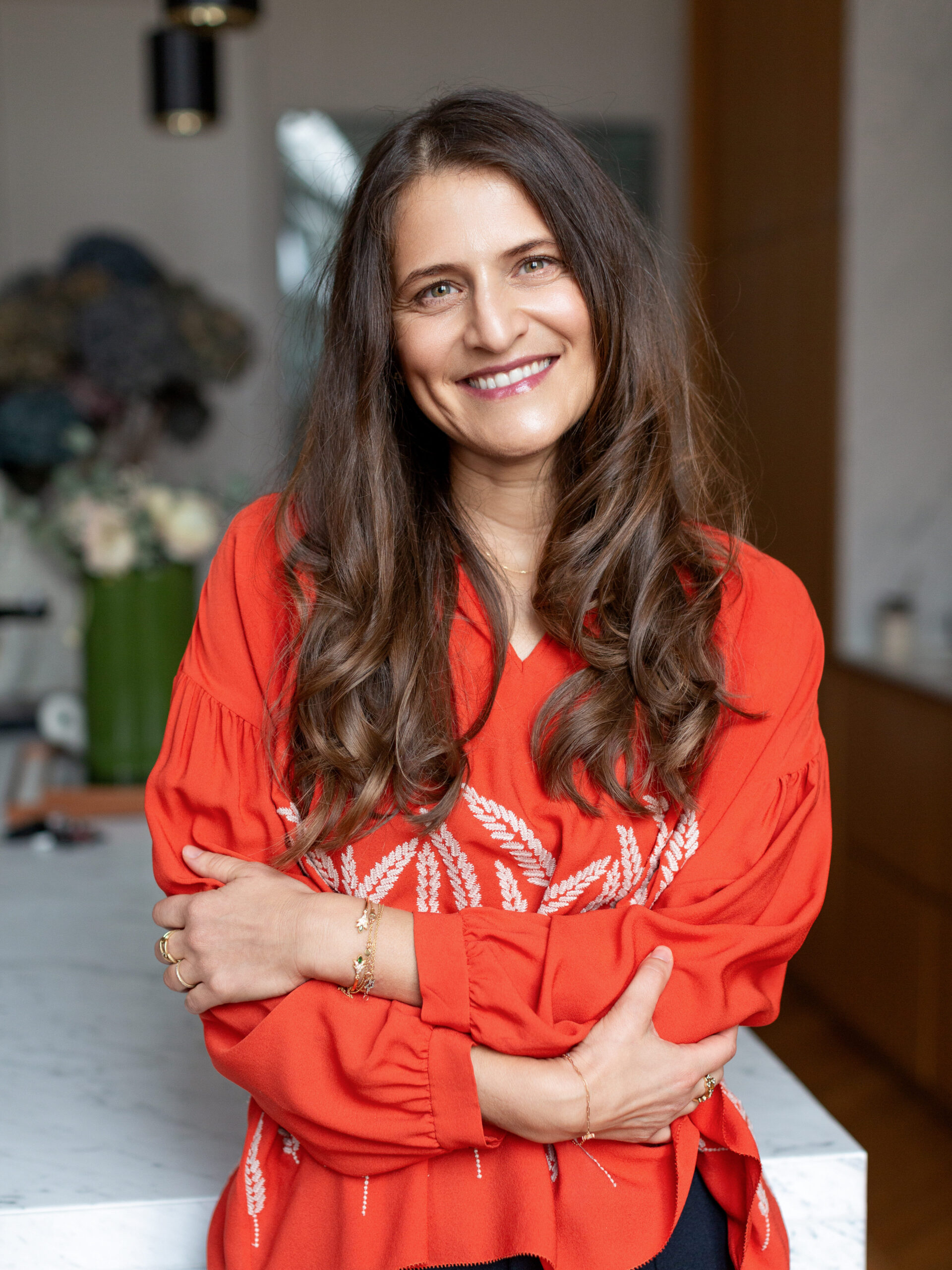
For nearly twenty years, Marina Sapritsky-Nahum has been documenting how Jewish life is lived, remade, and imagined in Ukraine and its diaspora. As a Visiting Fellow in Anthropology at the London School of Economics (LSE) and an Honorary Research Fellow at University College London (UCL), she brings together ethnographic fieldwork, historical sensitivity, and a commitment to connecting scholarship to public life.
Marina’s relationship with Odesa—the Black Sea port city that has been the heart of her research—began long before the world’s attention turned to Ukraine. Her book Jewish Odesa: Negotiating Identities and Traditions in Contemporary Ukraine (Indiana University Press, 2024) tells the story of the city’s Jewish population navigating complex historical legacies, mass emigration, and the politics of language, cultural revival, and national belonging.
Marina’s relationship with Odesa—the Black Sea port city that has been the heart of her research—began long before the world’s attention turned to Ukraine. Her book Jewish Odesa: Negotiating Identities and Traditions in Contemporary Ukraine (Indiana University Press, 2024) tells the story of the city’s Jewish population navigating complex historical legacies, mass emigration, and the politics of language, cultural revival, and national belonging.
Since Russia’s invasion of Ukraine in 2022, Marina’s research has documented how war disrupts and transforms Jewish communities—both those who remain in Ukraine and those who have sought refuge across Europe and the U.K. This work illuminates how displacement reshapes identity, community, and belonging in ways that will endure long after the conflict.
Throughout her career, Marina has worked at the intersection of research and practice. She has served as an advisor for Jewish organisations in Ukraine and the U.K., translating anthropological insight into community action. She writes regularly for the London School of Economics Religion and Global Society blog, Jewish Renaissance, Haaretz, and Tablet, engaging with urgent questions about identity, displacement, and belonging.
For nearly twenty years, Marina Sapritsky-Nahum has been documenting how Jewish life is lived, remade, and imagined in Ukraine and its diaspora. As a Visiting Fellow in Anthropology at the London School of Economics (LSE) and an Honorary Research Fellow at University College London (UCL), she brings together ethnographic fieldwork, historical sensitivity, and a commitment to connecting scholarship to public life.
Marina’s relationship with Odesa—the Black Sea port city that has been the heart of her research—began long before the world’s attention turned to Ukraine. Her book Jewish Odesa: Negotiating Identities and Traditions in Contemporary Ukraine (Indiana University Press, 2024) tells the story of the city’s Jewish population navigating complex historical legacies, mass emigration, and the politics of language, cultural revival, and national belonging.
Since Russia’s invasion of Ukraine in 2022, Marina’s research has documented how war disrupts and transforms Jewish communities—both those who remain in Ukraine and those who have sought refuge across Europe and the U.K. This work illuminates how displacement reshapes identity, community, and belonging in ways that will endure long after the conflict.
Throughout her career, Marina has worked at the intersection of research and practice. She has served as an advisor for Jewish organisations in Ukraine and the U.K., translating anthropological insight into community action. She writes regularly for the London School of Economics Religion and Global Society blog, Jewish Renaissance, Haaretz, and Tablet, engaging with urgent questions about identity, displacement, and belonging.